





MATRIX array detection
Many eyes see more than one – this is the motto behind our excellent MATRIX detector. Numerous photodiodes integrated in a single detector chip view the sample from different angles and allow you to see things that you couldn’t otherwise. The MATRIX detector drastically improves signal-to-background ratio, resolution, and dynamic range!
Many eyes see more than one
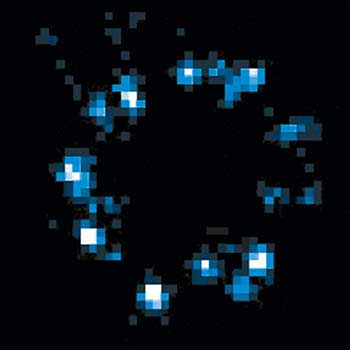
MINFLUX Module
Single-digit nanometer resolution with the MINFLUX module for our MIRAVA POLYSCOPE
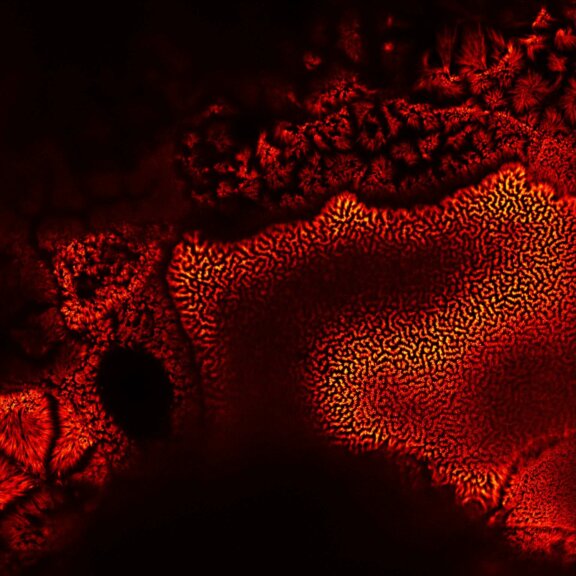
MATRIX Detector
Many eyes see more than one. The MATRIX detector drastically improves signal-to-background ratio, resolution, and dynamic range.
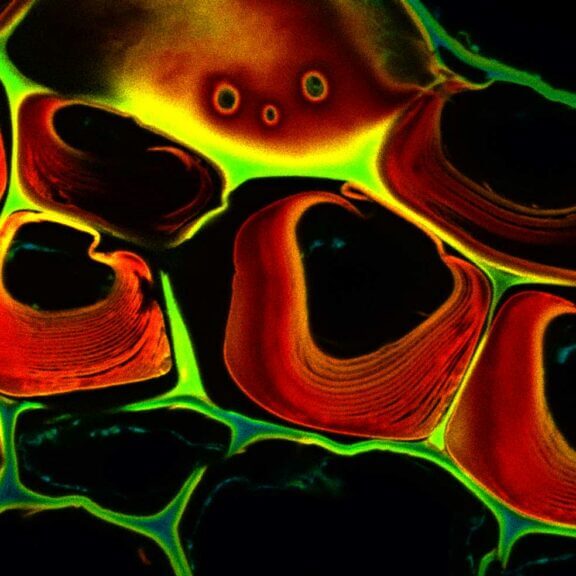
TIMEBOW Imaging
TIMEBOW lifetime imaging for stunning results at confocal and STED super-resolution.
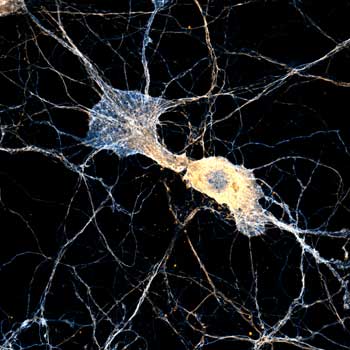
FLEXPOSURE Illumination
Brings down the light dose on your sample and lables dramatically. Key ingredient for volume and live-cell superresolution.
RAYSHAPE Mirror
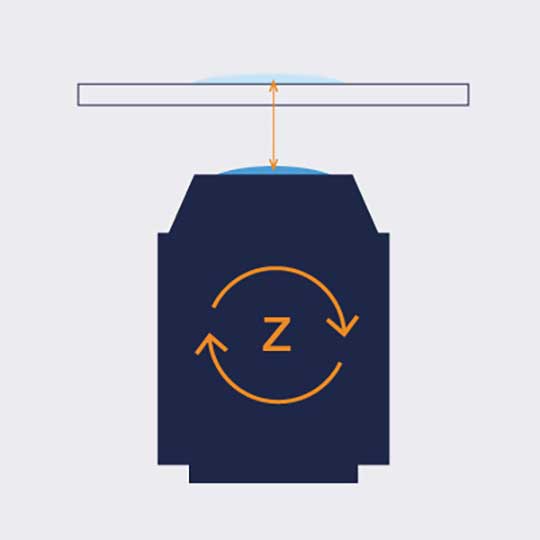
Dynamic aberration correction with a deformable mirror over about 200 µm z-range. 140 digital actuators adjust the mirror surface within milliseconds.


Custom Solutions
We offer solutions for even the most challenging applications. Everything that can be done, we will do.
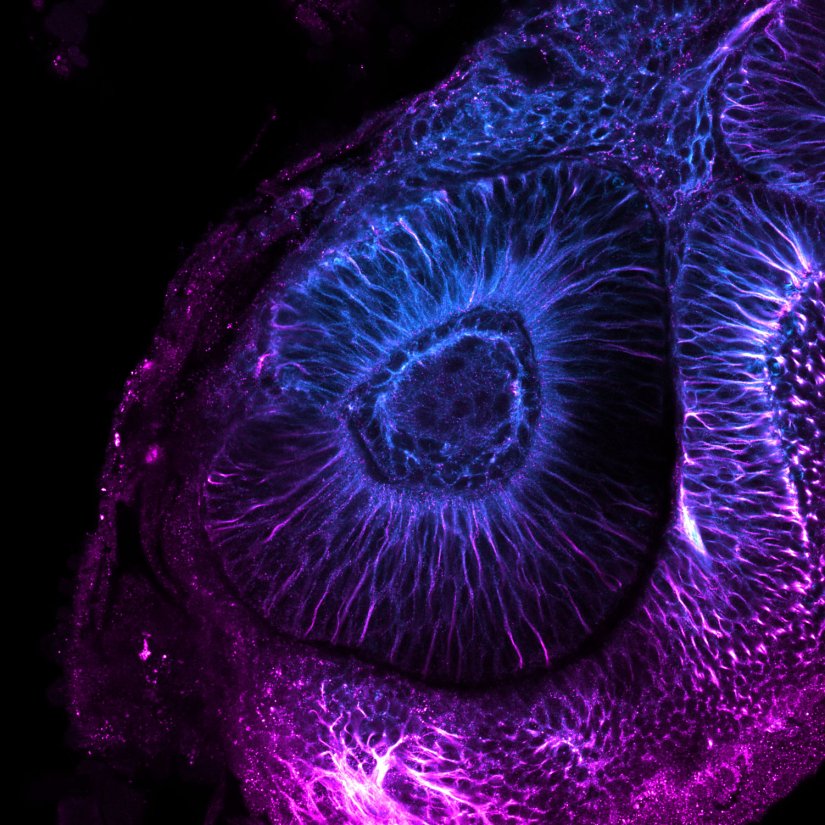
Description
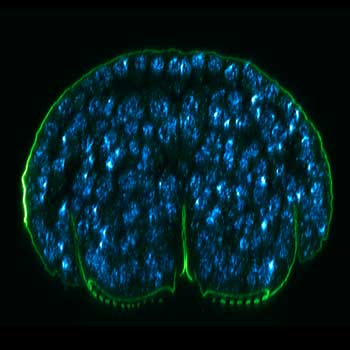
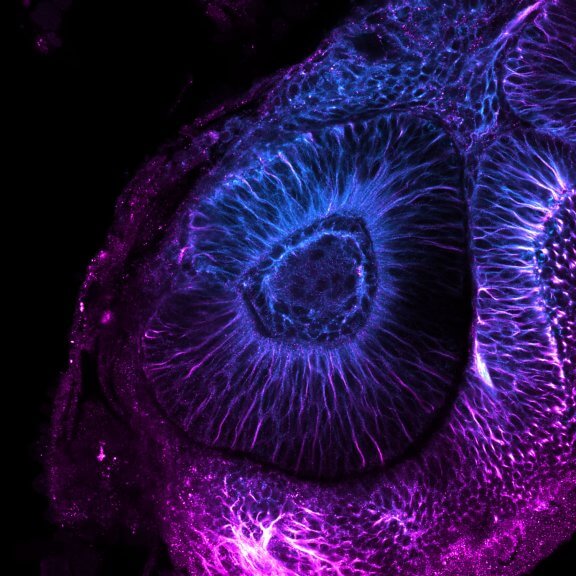
Confocal image of a developing zebrafish eye showing tubulin stained with abberior STAR RED and abberior STAR ORANGE.
Image courtesy of Graziamaria Paradisi, Marco Tartaglia, Antonella Lauri, Ospedale Pediatrico Bambino Gesù, Rome, Italy
Modules:
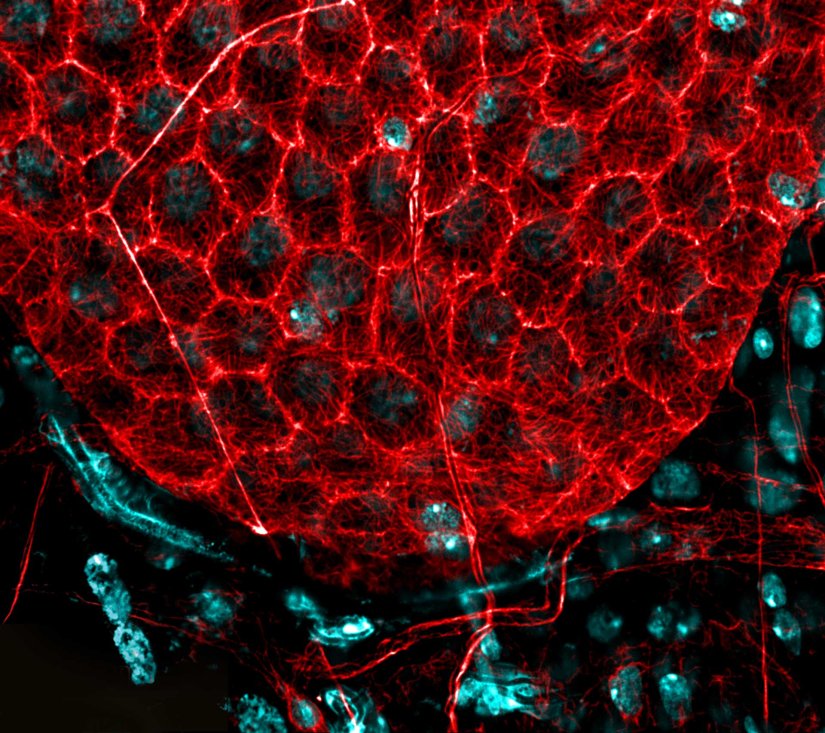
Description
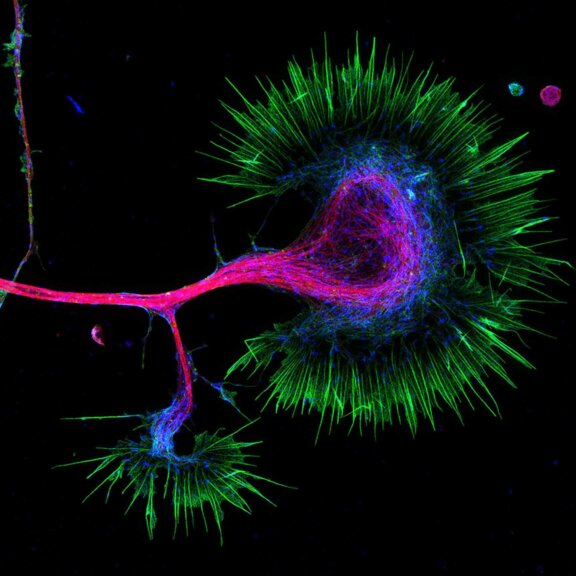
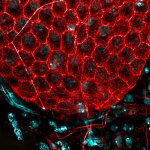
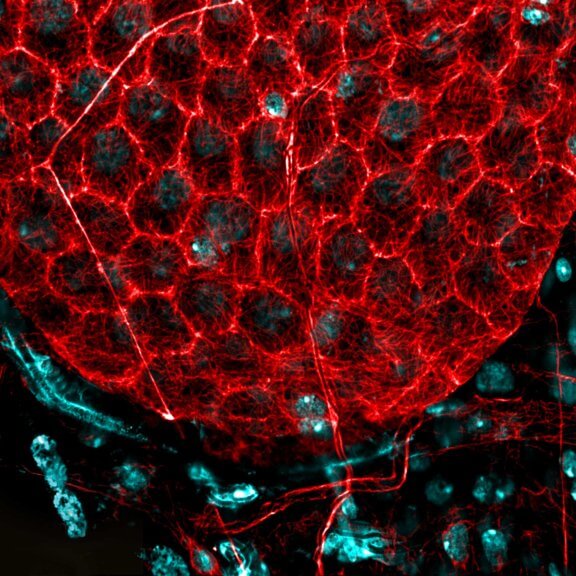
Drosophila follicle surface stained for tubulin (red, abberior STAR RED) and DNA (cyan, abberior LIVE 550, imaged with MATRIX array detection
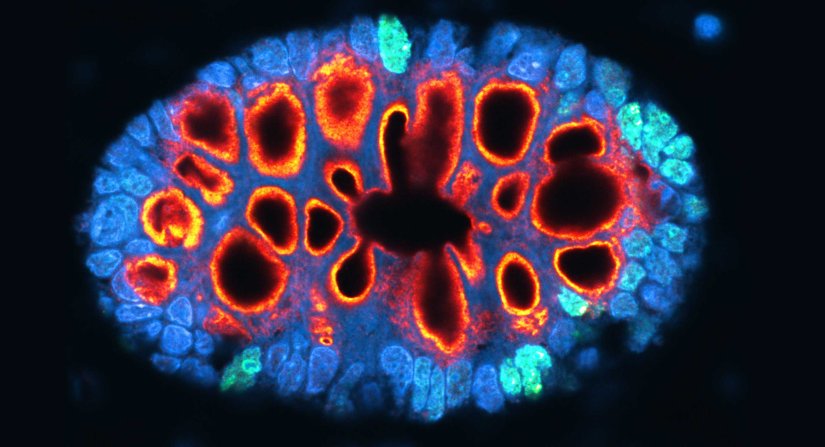
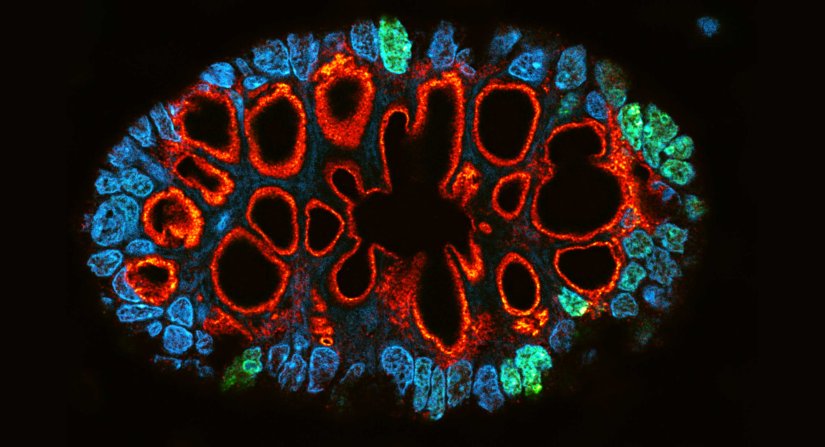
Description
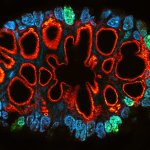
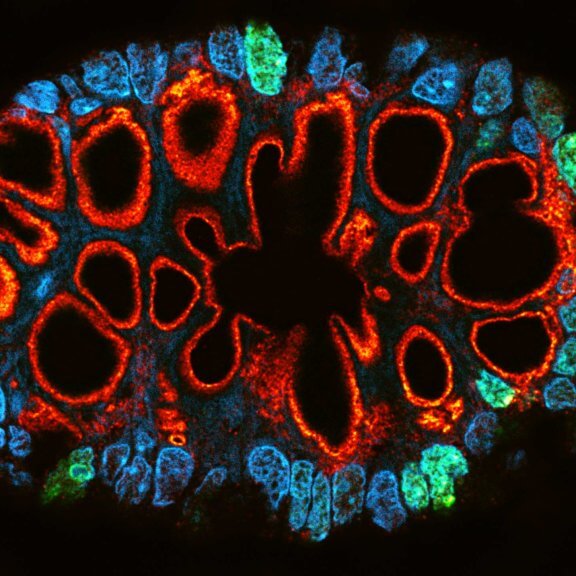
Paraffin section of gut biopsy stained for Ki67 (abberior STAR ORANGE), Muc2 (abberior STAR RED), and DAPI.
Modules:
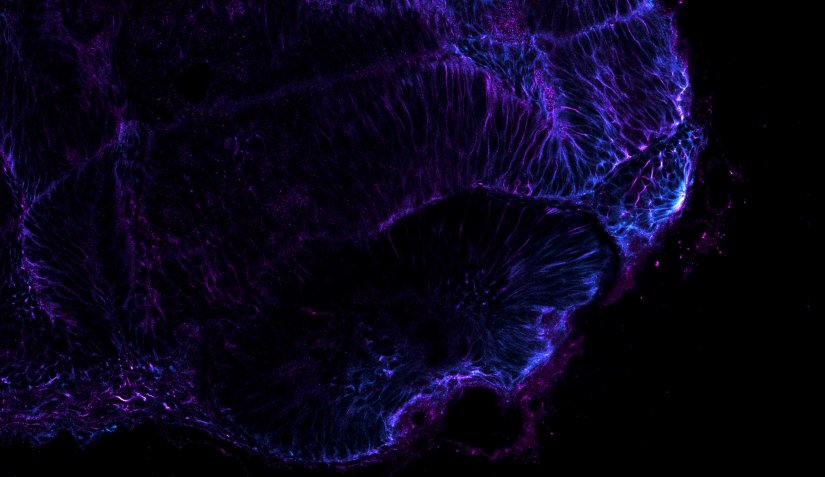
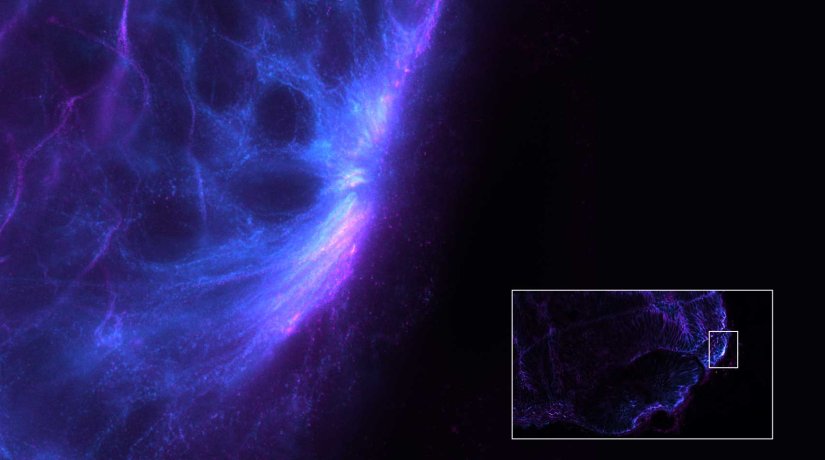
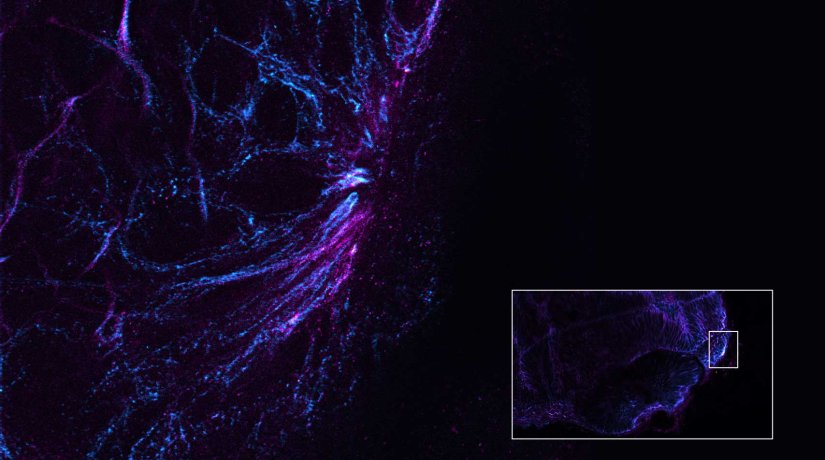
Description
Gain in both signal-to-background ratio and resolution: MATRIX detection dramatically improves a conventional STED image of the zebrafish olfactory epithelium, resulting in a perfect and crystal-clear image revealing even more detail than STED alone can.
Modules:
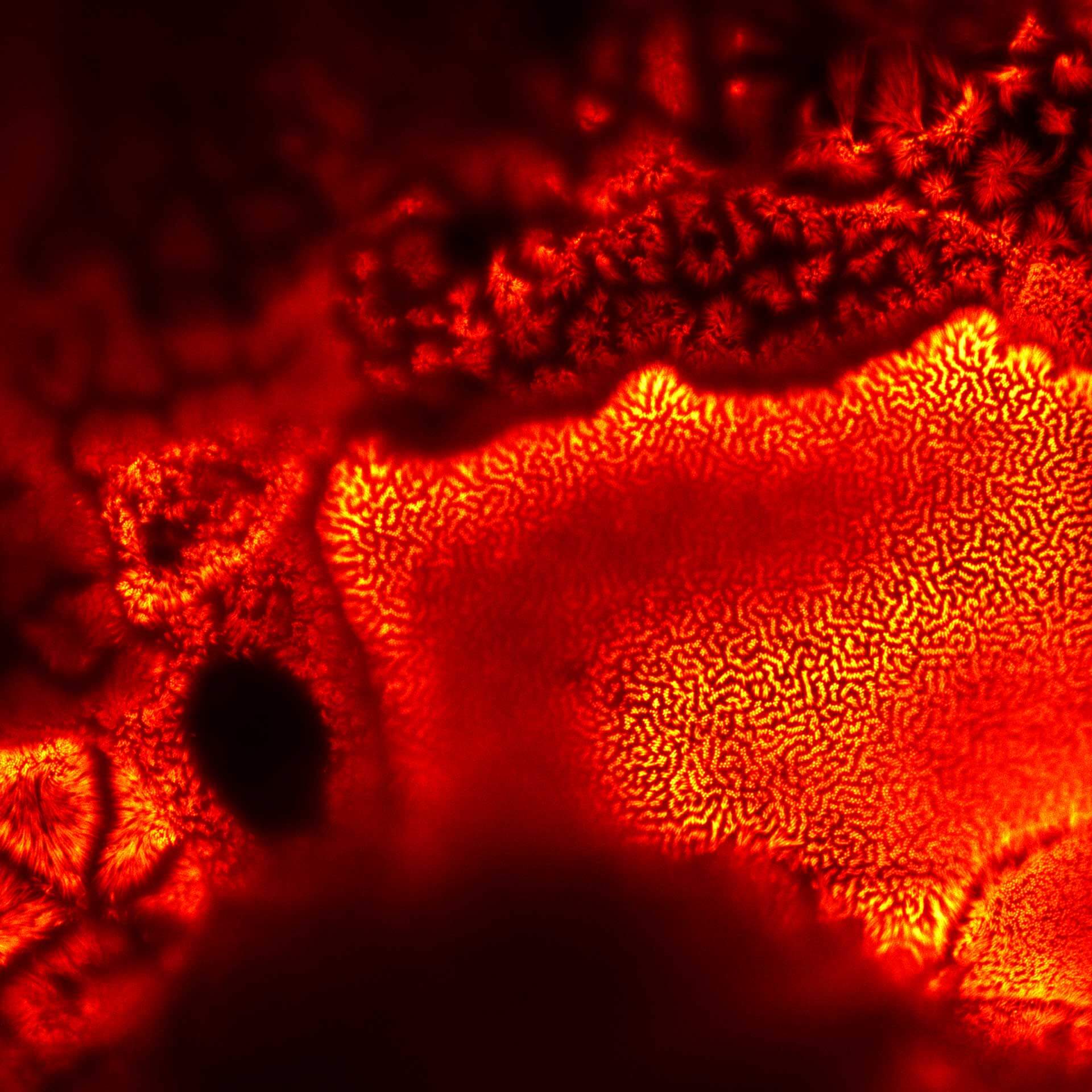
Description
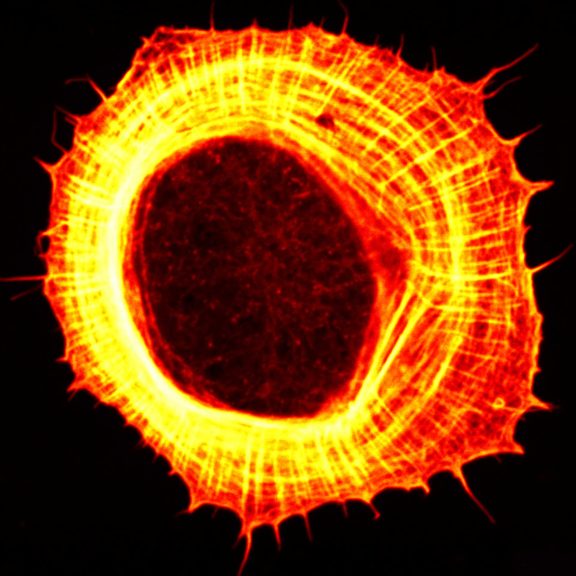
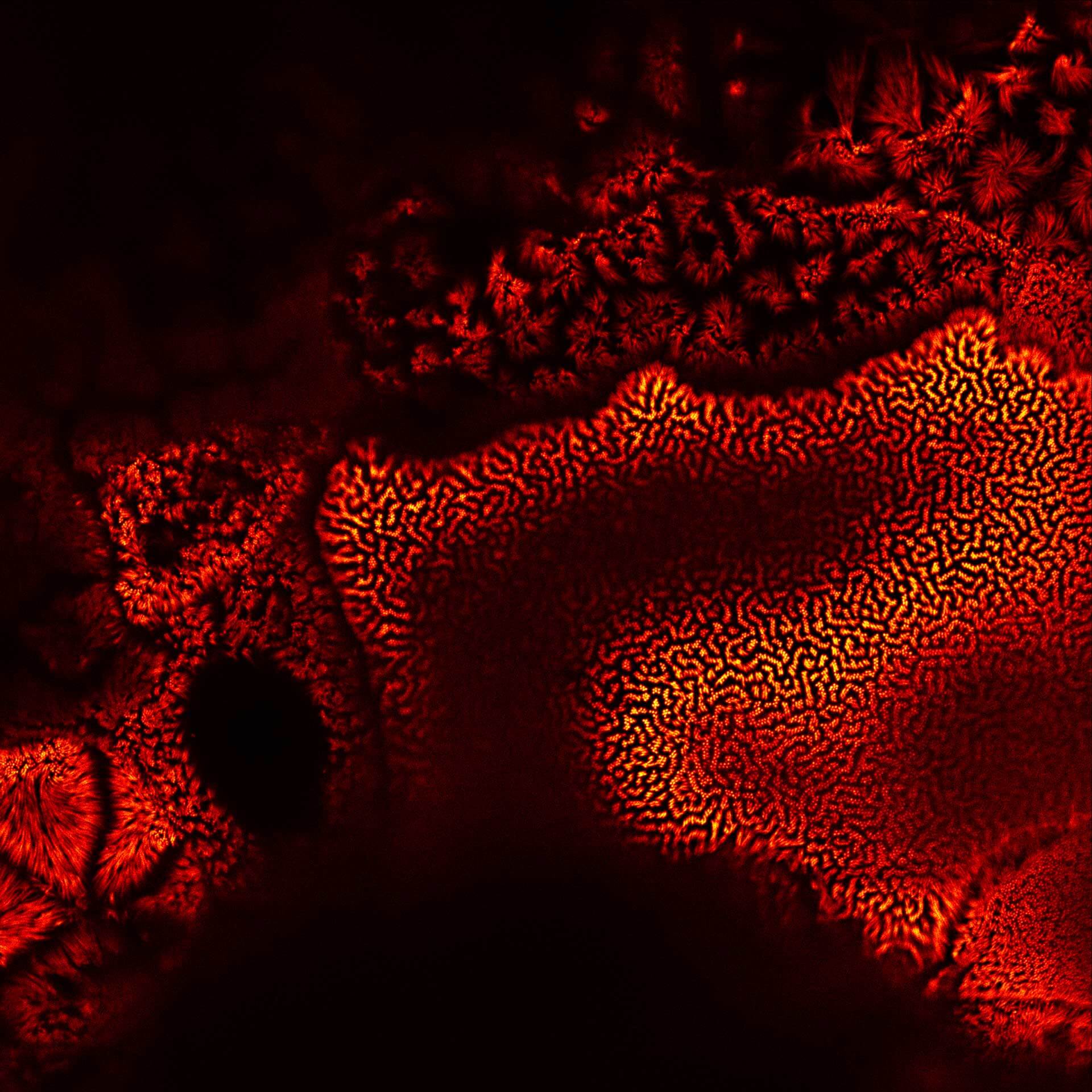
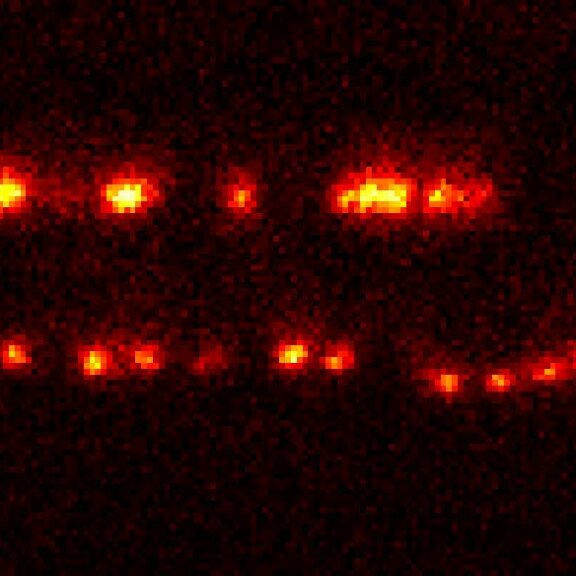
Actin in microvilli of Caco2 cells. Fixed cells were stained with abberior STAR RED phalloidin. MATRIX detection removes background signal and dramatically improves optical sectioning for 2D-STED.
Samples by Prof. Dorothee Günzel & Roman Mannweiler, Institut für Klinische Physiologie, Charité – Universitätsmedizin Berlin.
Modules:
Description
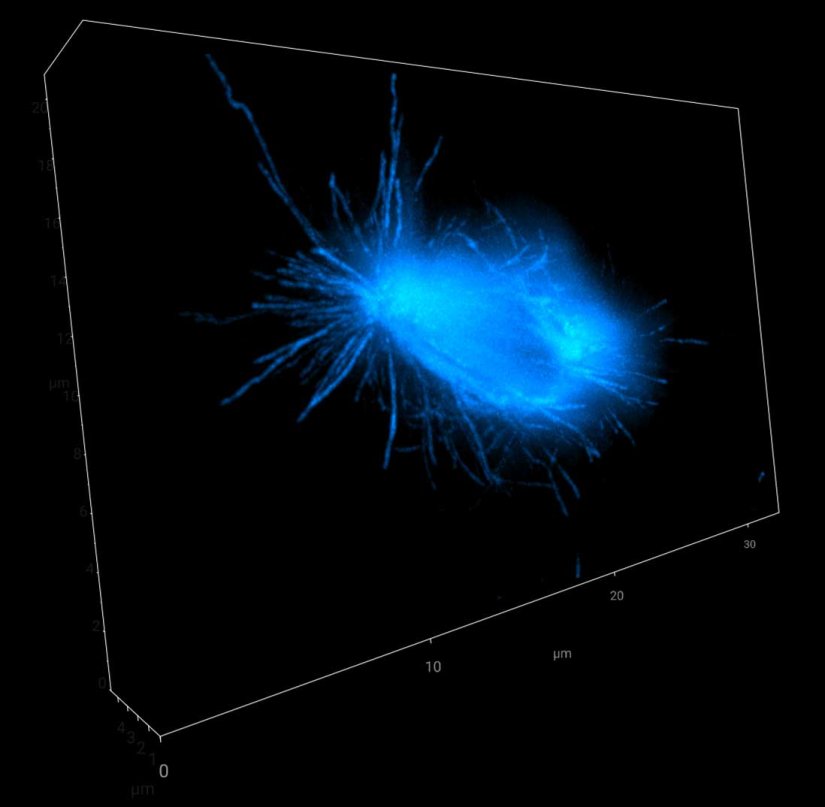
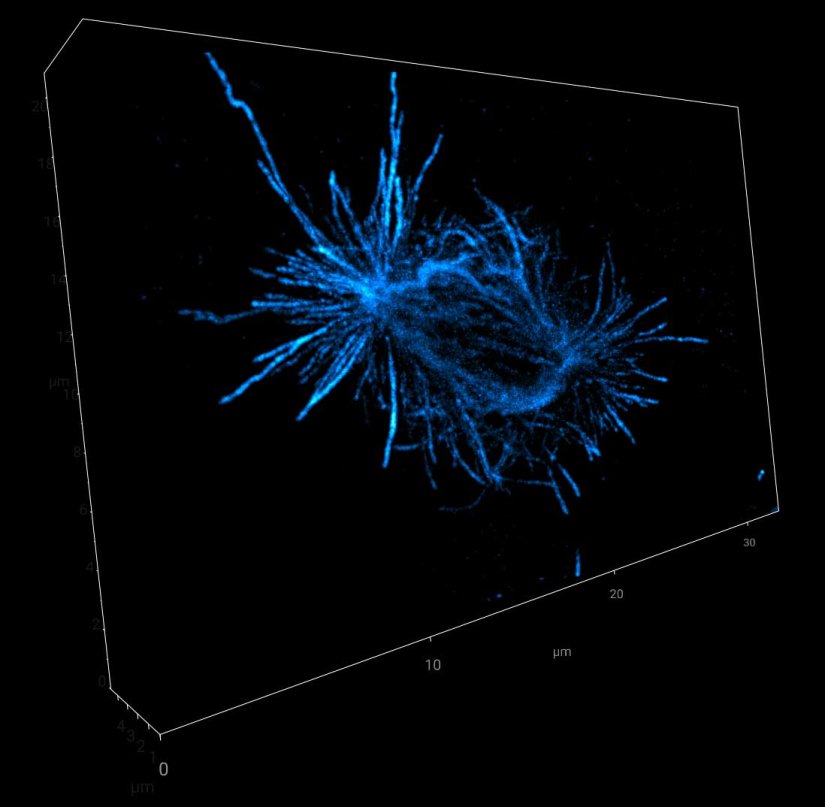
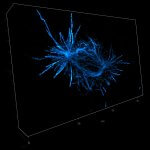
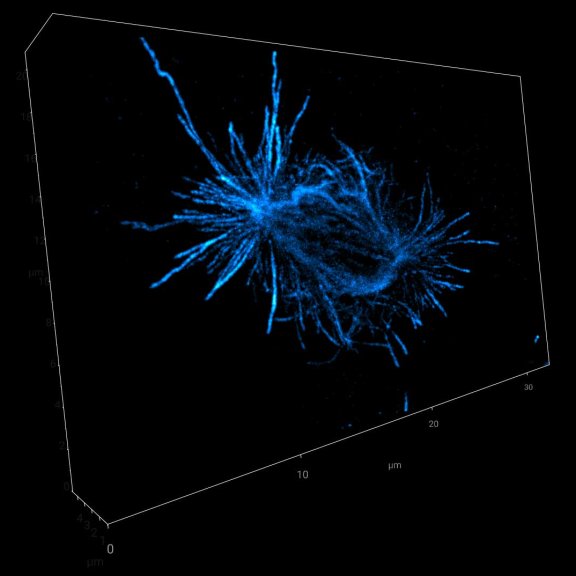
Comparison of a 3D volume of cellular tubulin filaments:
Signal from outside the focal plane recorded by a single detector often fogs the image.
MATRIX records the out-of-focus signal separately so that it can be removed from the overall signal, resulting in an image with superior signal-to-background ratio.
Modules:
Description
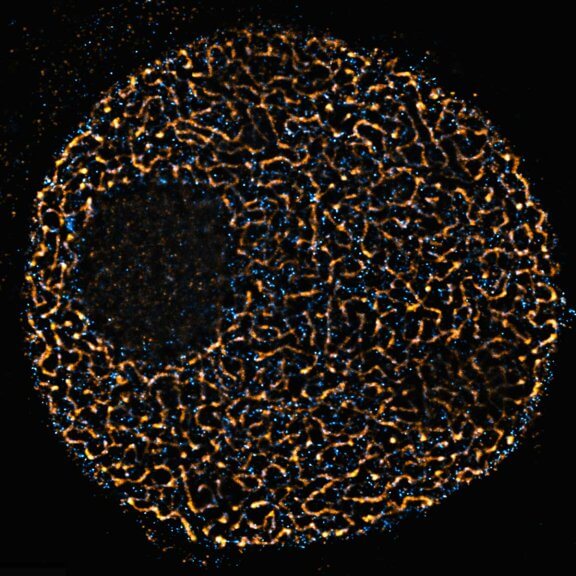
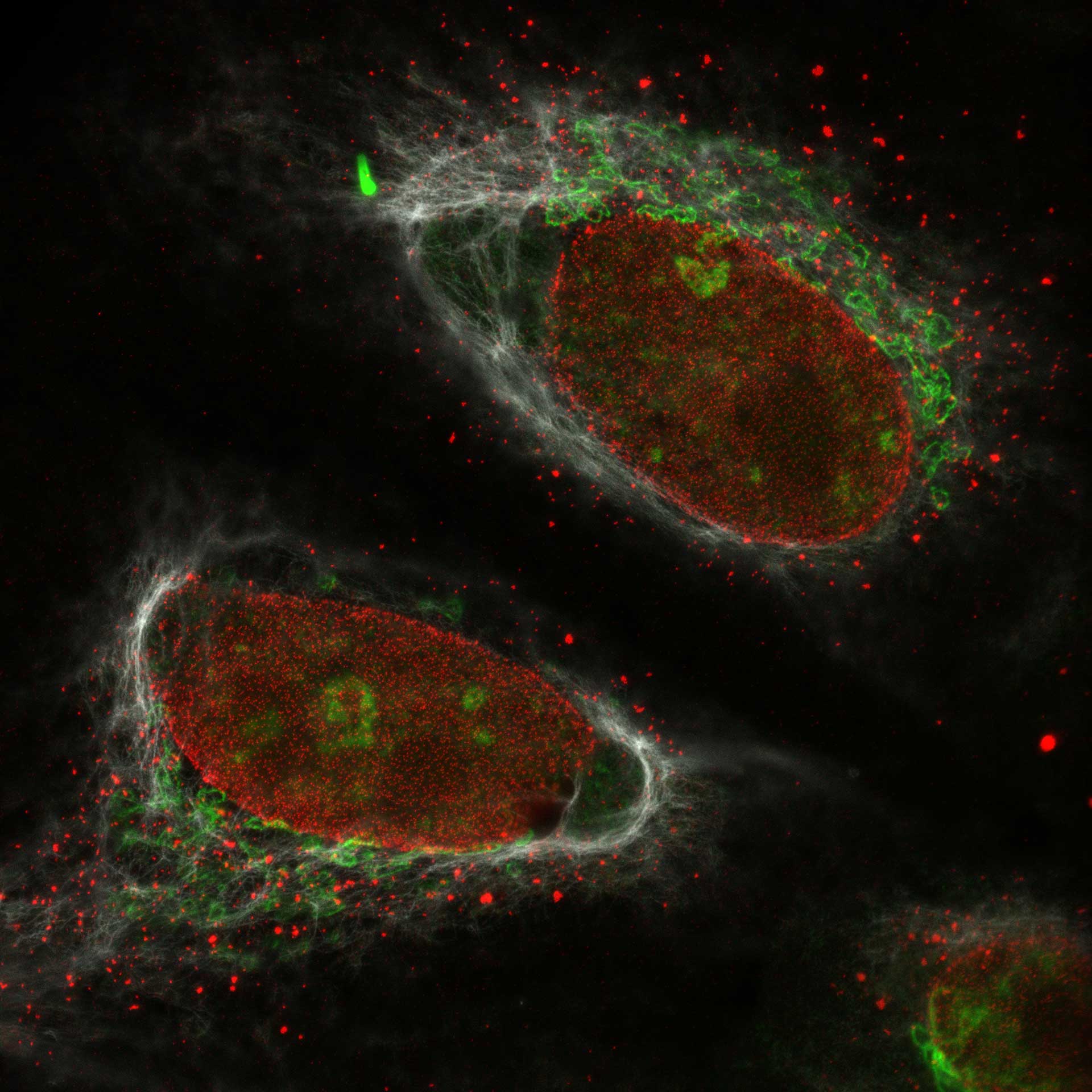
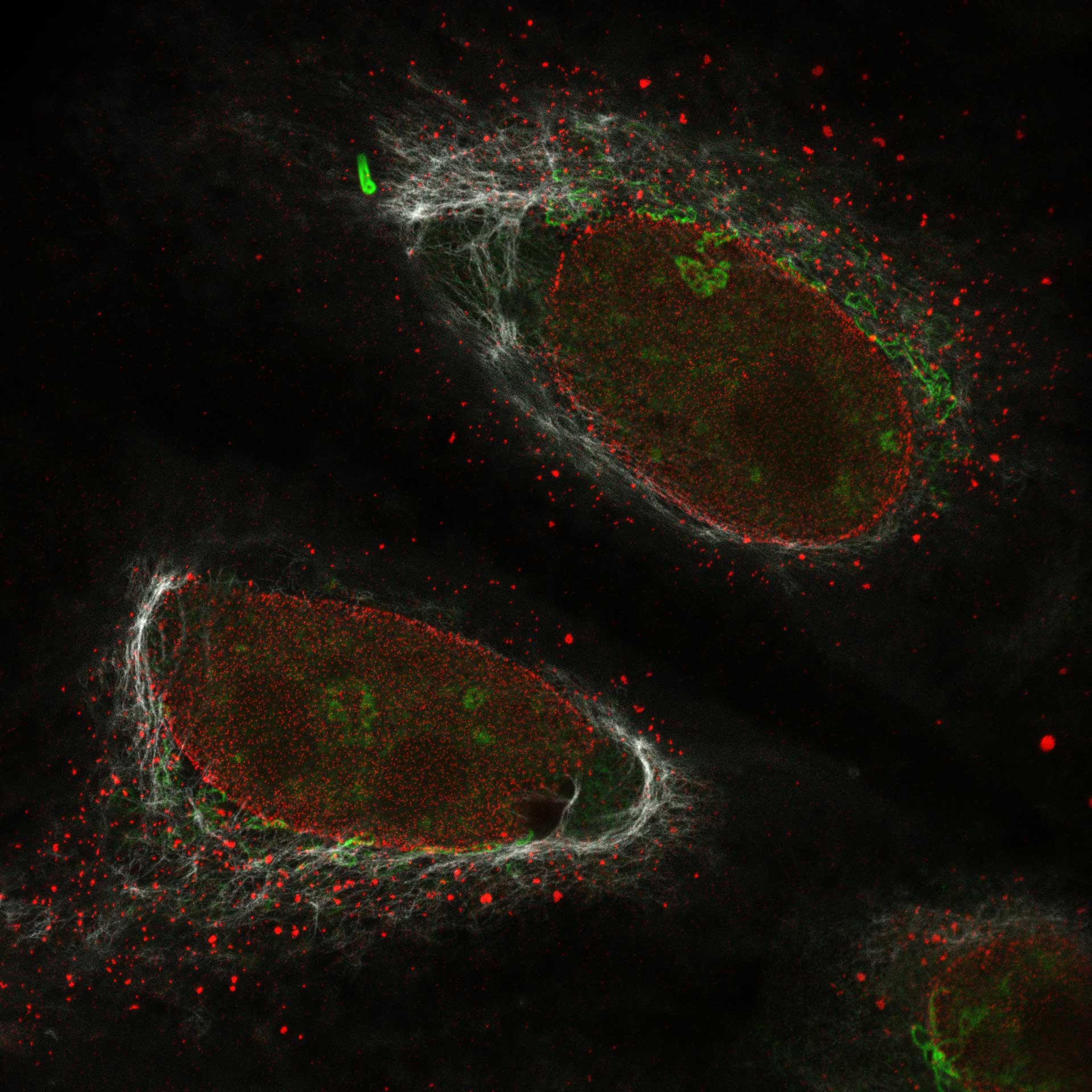
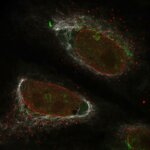
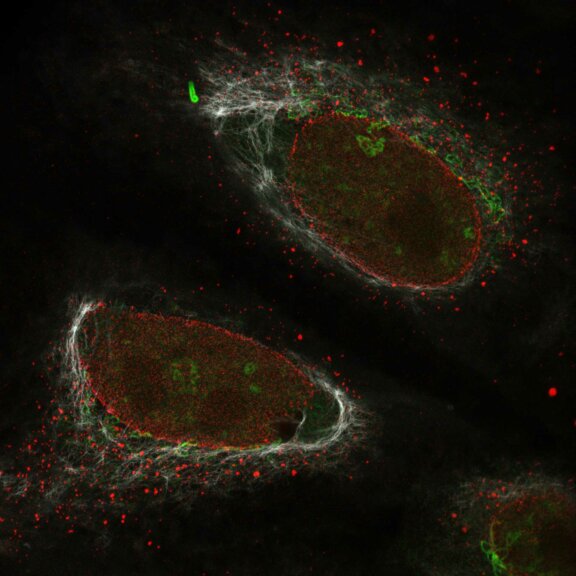
Cultured mammalian cells (NUP, Giantin, and Vimentin, labeled with abberior STAR RED, STAR ORANGE, STAR GREEN). Out-of-focus contributions of all three types of structures is effectively removed and section is improved.
Modules:
Description
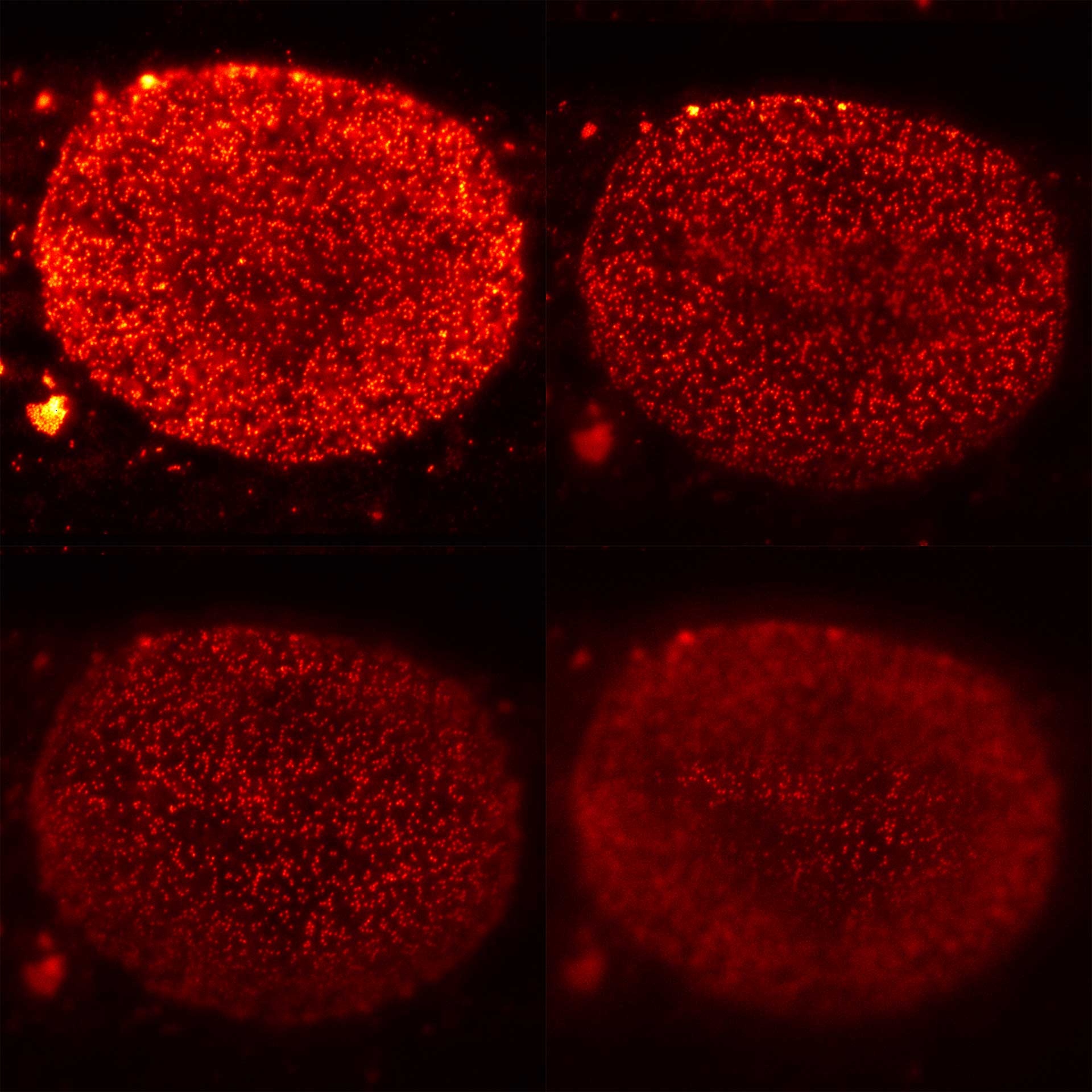
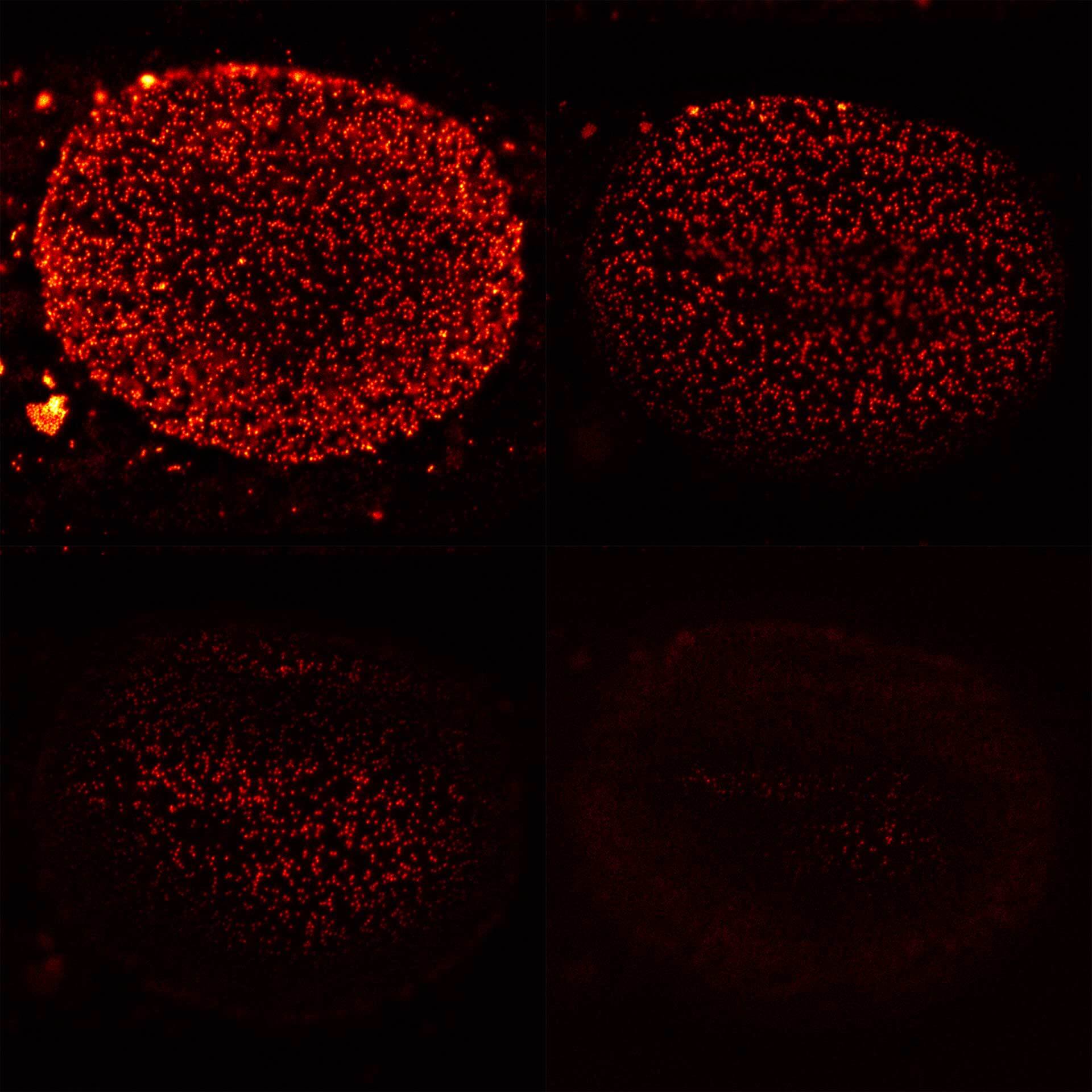
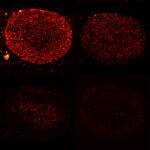
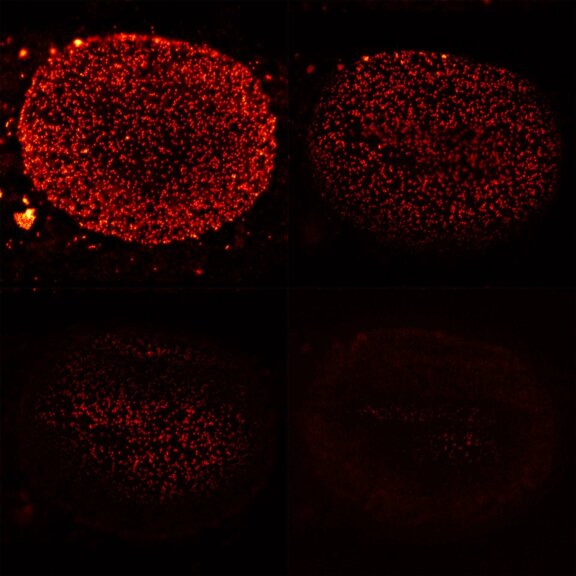
Four xy-planes from a volume stack recording of nuclear pore complexes (NUPs). With MATRIX, nuclear pores that are not in focus are effectively removed from the image.
Modules:
Description
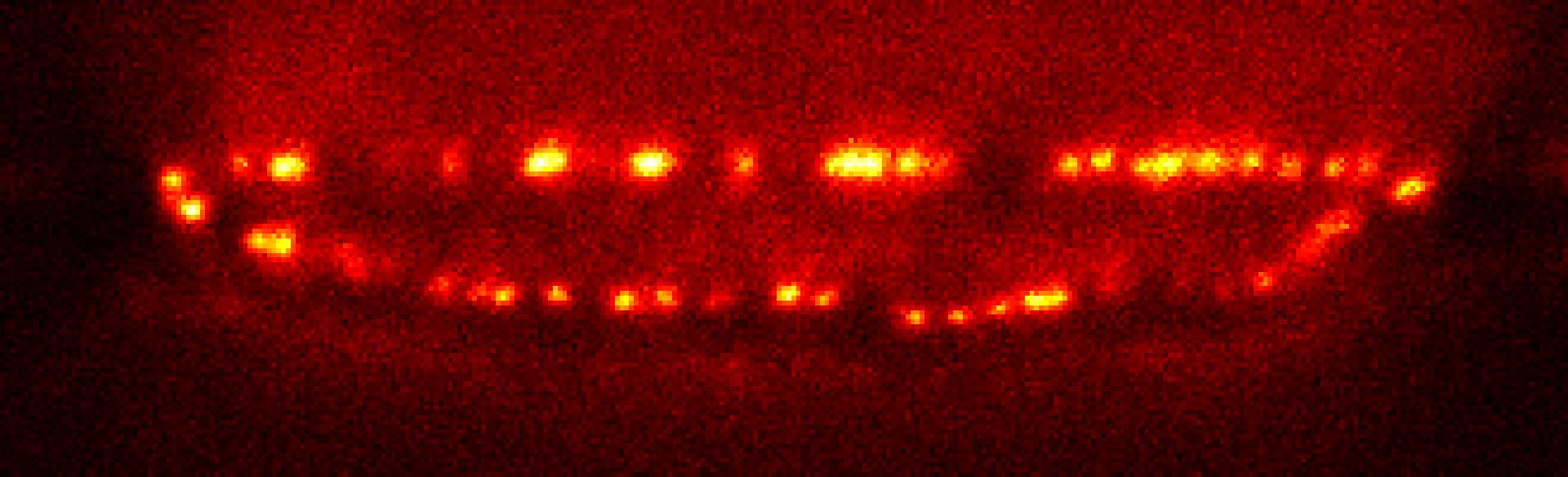
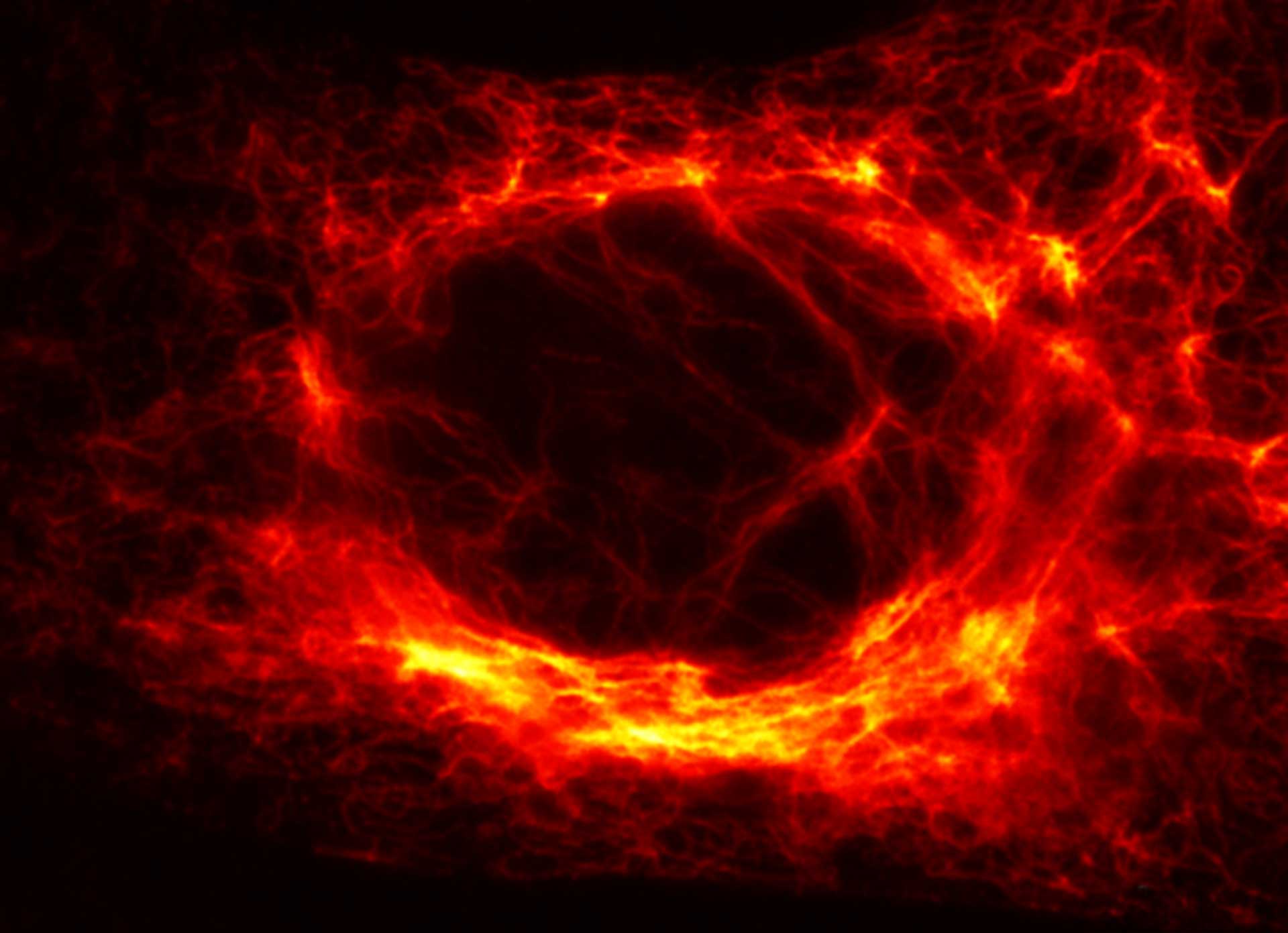
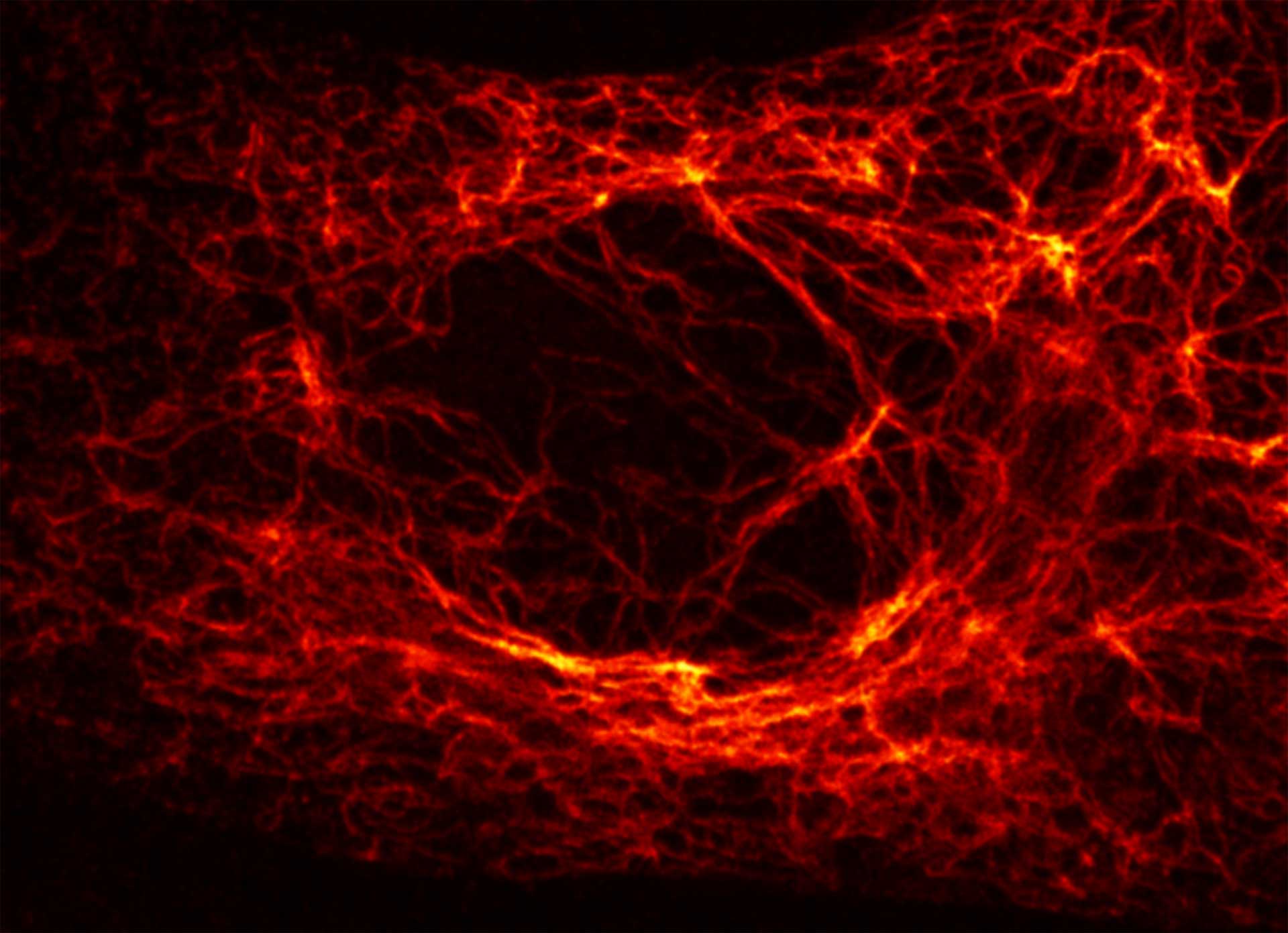
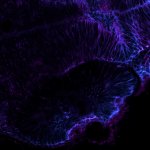
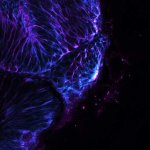
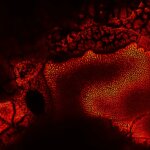
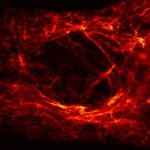
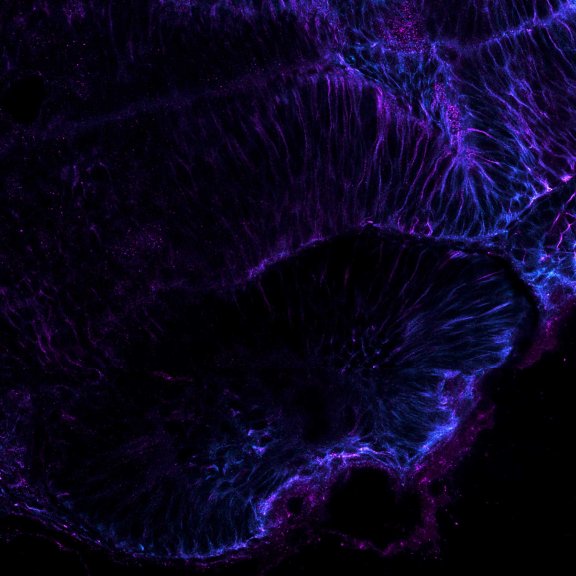
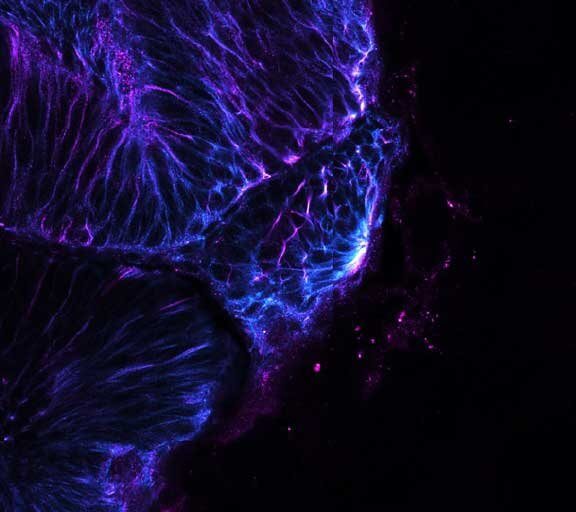
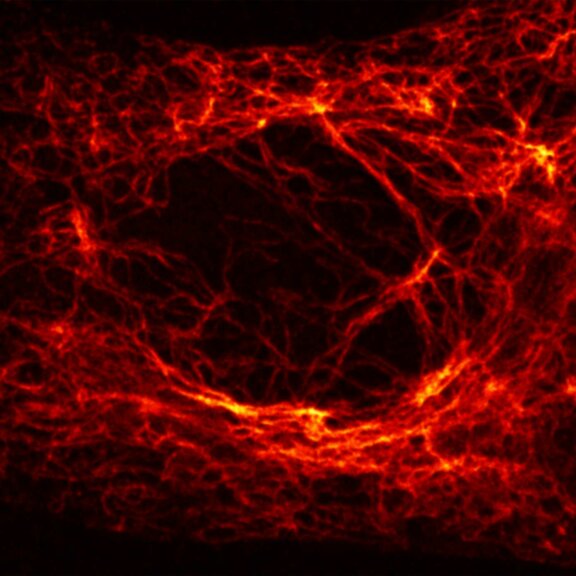
Vero cell, vimentin is labeled with abberior STAR RED. Note how in areas, where vimentin is thick, MATRIX removes background, while keeping the fibers in the foreground intact.
Modules:

Get rid of the haze
detect in focus, reject the rest
It’s all about separating the focal plane’s signal from the rest. With confocal and common STED microscopes, unwanted signal coming from outside the focal plane is blocked by a pinhole before it can reach the detector. However, this only works up to a certain degree and the pinhole generally diminishes the signal. As a result, background light often fogs the image.
So the question is: How can we get rid of the haze? There are numerous post-processing algorithms available, but these merely guess an approximation of the background signal and are prone to producing computational artefacts.
abberior’s MATRIX array detection physically measures the background separately and thus can truly extract the in-focus signal.
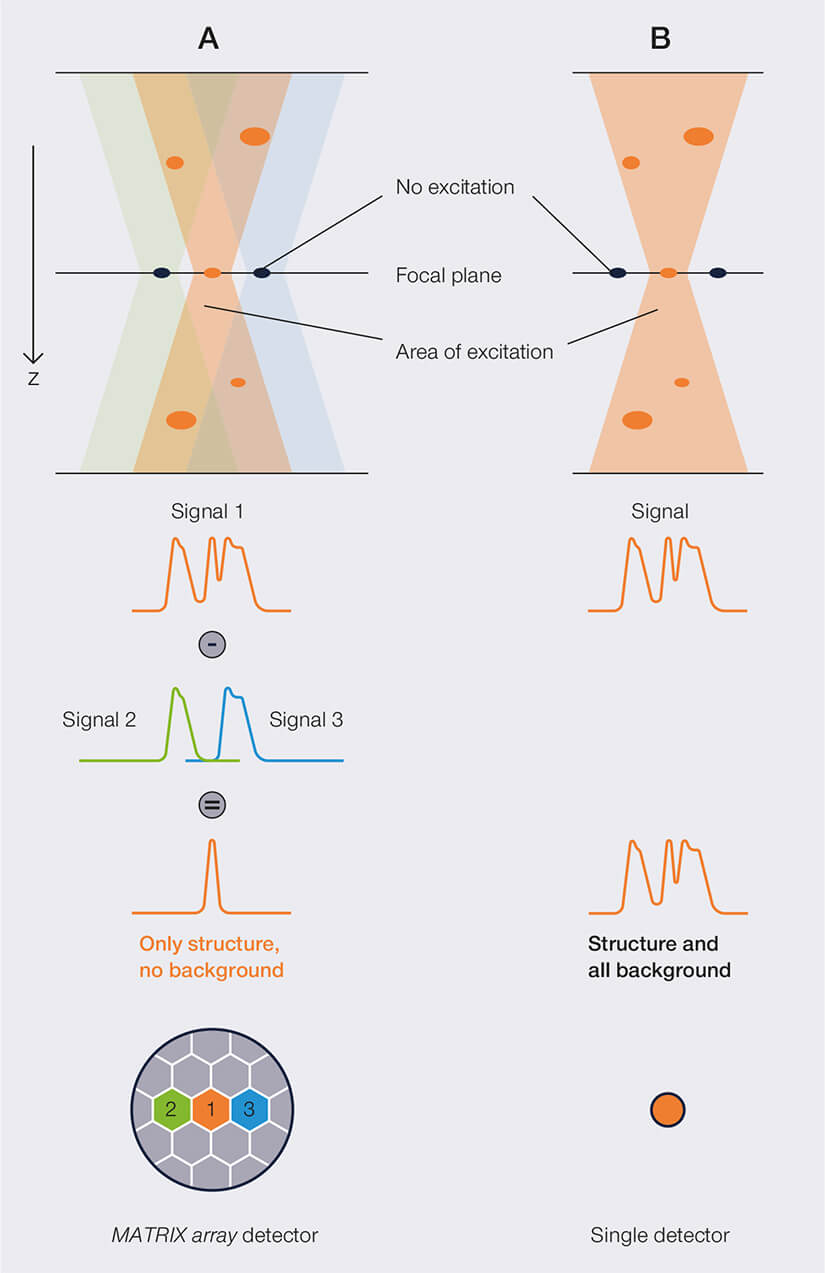
Tackling the background problem
When a single detector receives a light signal, there is no way to tell whether it originates from the focal plane or from out-of-focus structures, because it looks exactly the same (B).
In contrast, each of the 23 elements of the MATRIX detector “look” at a slightly different spot in the sample (A). Some of the elements record both in-focus and background signal (signal 1 in the figure), while others only receive out-of-focus signal (signal 2 and 3 – note that the excitation double-cone only overlaps with the central detector element).
This separate recording makes it possible to remove out-of-focus signal from signal 1, leaving the final image without background, sharp and clear. It’s by no means another type of estimation procedure, it’s just optics!
MATRIX array detection
unparalleled optical sectioning, 100% measured superresolution
Apart from separating in-focus from out-of-focus signal, the many small MATRIX detector elements also function as tiny pinholes of their own. They thus yield high confocal resolution, while together they cover the area of a large pinhole, collecting all the emission from the sample. With a conventional single detector behind a pinhole, you have to choose between high resolution and low signal or low resolution and high signal. With our MATRIX detector, you can overcome this dilemma and get both – high resolution and high signal – at the same time.
And when adding TIMEBOW on top of the MATRIX detector, all the information that is contained in the fluorescence signal is retrieved. Every one of the MATRIX detector elements simultaneously records information about both the origin of photons relative to the focal plane and about their lifetime. This way, the unbeatable combination of
TIMEBOW and MATRIX is more than the sum of its parts. It brings you much higher signal-to-background-ratio, better resolution, and an impressive dynamic range.
Then there is also TRUESHARP, our tool for intelligent deconvolution. It can work in information measured with MATRIX and TIMEBOW to remove background and make your images shine even more.
The idea behind the technology
a quick do-it-yourself test
Look at your thumb with an extended arm and with one eye closed. Now close the first eye and open the other one: your thumb will seem to jump sideways in front of whatever is in the background. Cleary, having two eyes (detectors) allows you to distinguish between foreground and background without any mathematical, artefact-generating post-processing algorithm – the simple fact that your thumb moves in front of the background is enough to tell the two apart. You know you have a real breakthrough when something is simple and effective… And with over 20 detectors, background contribution is fully defined and removed from your image, while others have the vision of a one-eyed pirate.

MATRIX detector
Focus on your thumb and close one eye.

MATRIX detector
Now close your eye and open the other one. The scence behind your thumb will jump, allowing you to tell foreground (your thumb) from background. This is how our MATRIX detector works.

Point detector
To a single point detector, foreground and background look exactly the same. They cannot be physically discriminated.
- Effective background reduction without artefact-prone mathematical estimation algorithms
- Highly improved optical sectioning
- Enables precise analysis of your image data
Superior STED with MATRIX array detection
Microscope Systems
Fluorescence microscopy is an indispensable tool and for your science, you need the finest technology combined with hassle-free operation from abberior.
TIMEBOW Imaging
TIMEBOW lifetime imaging for stunning results at confocal and STED super-resolution.
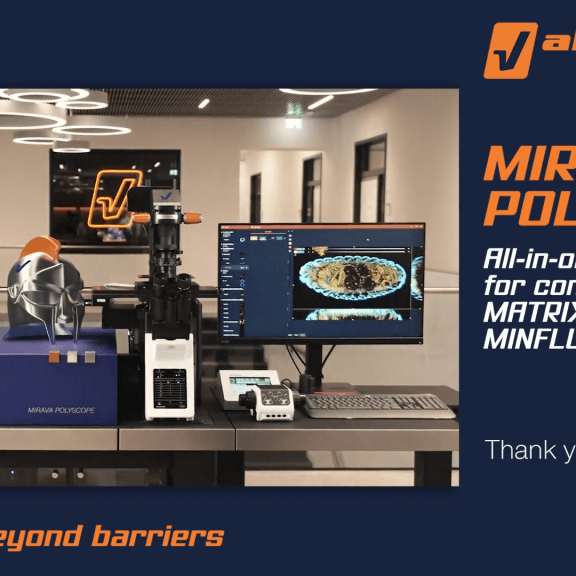
MIRAVA POLYSCOPE – Watch the premiere of the world’s only all-in-one solution for confocal, MATRIX, STED, and MINFLUX microscopy
abberior’s MIRAVA is the first true POLYSCOPE. Follow Stefan W. Hell, Matthias Reuss, Evelyn Garlick, and Martin Meschkat as they demonstrate all the features of our new microscope and take…