


Products

Superresolution & Confocal Systems

  • Overview
  • MINFLUX
  • MIRAVA POLYSCOPE
  • INFINITY
  • FACILITY
  • STEDYCON
  • Software Overview
  • LiGHTBOX
  • STEDYCON smart control
  • iMSPECTOR

Superresolution & Confocal Modules

  • Overview
  • MINFLUX Module
  • MATRIX Detector
  • TIMEBOW Imaging
  • FLEXPOSURE Illumination
  • RAYSHAPE Mirror
  • TRUESHARP Deconvolution
  • EASY3D
  • RAINBOW Detection
  • STED Lasers
  • Autoalignment
  • Autofocus
  • Excitation Lasers
  • Accessories
  • Custom Solutions

Dyes & Labels

  • Overview
  • abberior STAR
  • abberior LIVE
  • abberior FLUX
  • abberior CAGE
  • abberior Supplies

Shop

  • Dyes by Product Name
  • Dyes by Technique
  • Dyes by Label
  • Mounting Medium
  • Cells and Nanoparticles

Applications

  • Overview
  • Biophysics
  • Cell Biology
  • Live Cell Imaging
  • Material Science
  • Membrane biology
  • Microbiology
  • Neurobiology
  • Physiology
  • Plant Science
  • Virology
  • Zoology

Company

  • People
  • Founders
  • Mission
  • Career
  • Vacancies
  • Locations

News & Events

  • News
  • Events
  • Webinars
  • Past Events

Expertise

  • Knowledge Base
  • FAQ Videos
  • FAQ
  • Publications
  • White Papers
  • Sample Gallery
  • Microscopy Tutorials
  • Webinar Recordings
  • Protocols
  • Support
  • Contact
  • Shop
  • Search
  • EN
    中文
    Language
@abberior.rocks
MENU Contact
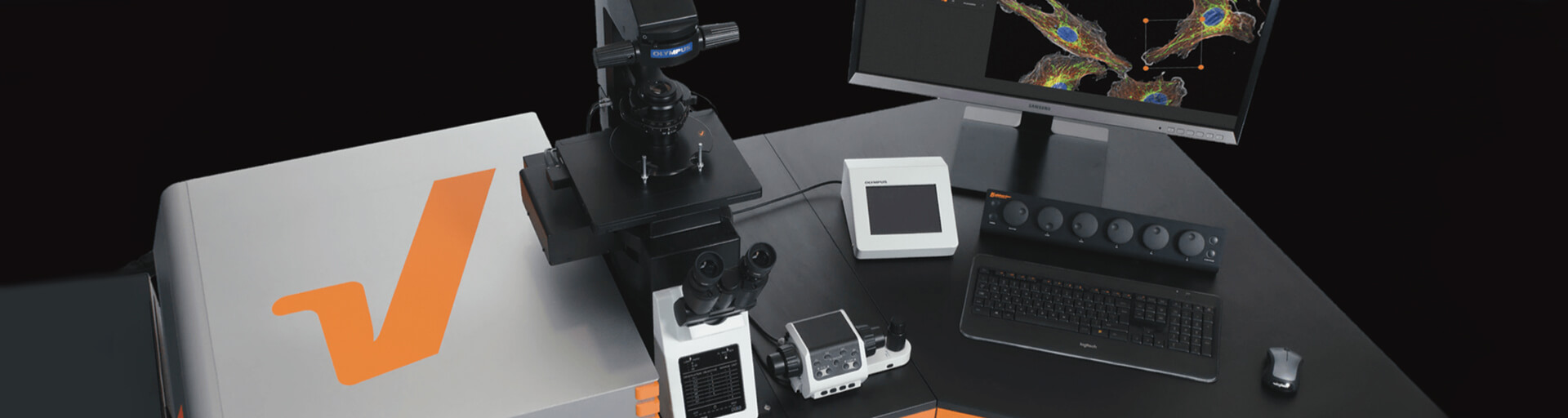
MIRAVA POLYSCOPE – All in one and on for all: the perfect image
Science beyond Barriers

abberior instruments

Cell Biology, Plant Sciences

2025
Nature

Bimodal centromeres in pentaploid dogroses shed light on their unique meiosis

Authors:

V. Herklotz, M. Zhang, T. Nascimento, R. Kalfusová, J. Lunerová, J. Fuchs, D. Harpke, B. Huettel, U. Pfordt, V. Wissemann, A. Kovařík, A. Marques, C. M. Ritz

Keywords:

centromere; meiosis; bimodal centromere; pentaploid; subgenome; THILA; retrotransposons; tandem-repeat-based centromere; asymmetrical inheritance system

Abstract:

Sexual reproduction relies on meiotic chromosome pairing to form bivalents, a process that is complicated in polyploids owing to the presence of multiple subgenomes1. Uneven ploidy mostly results in sterility due to unbalanced chromosome pairing and segregation during meiosis. However, pentaploid dogroses (Rosa sect. Caninae; 2n = 5x = 35) achieve stable sexual reproduction through a unique mechanism: 14 chromosomes form bivalents and are transmitted biparentally, while the remaining 21 chromosomes are maternally inherited as univalents2,3. Despite being studied for over a century, the role of centromeres in this process has remained unclear. Here we analyse haplotype-resolved chromosome-level genome assemblies for three pentaploid dogroses. Subgenome phasing revealed a bivalent-forming subgenome with two highly homozygous chromosome sets and three divergent subgenomes lacking homologous partners, therefore explaining their meiotic behaviour. Comparative analyses of chromosome synteny, phylogenetic relationships and centromere composition indicate that the subgenomes originated from two divergent clades of the genus Rosa. Pollen genome analysis shows that subgenomes from different evolutionary origins form bivalents, supporting multiple origins of dogroses and highlighting variation in subgenome contributions. We reveal that bivalent-forming centromeres are enriched with ATHILA retrotransposons, contrasting with larger tandem-repeat-based centromeres mainly found in univalents. This centromere structural bimodality possibly contributes to univalent drive during female meiosis. Our findings provide insights into the unique reproductive strategies of dogroses, advancing our understanding of genome evolution, centromere diversity and meiotic mechanisms in organisms with asymmetrical inheritance systems.

< Back to publications
Full article >
linkedin facebook bluesky twitter Instagram

World+49 551 9995 4010USA+1 301 661 0078

© 2025 abberior

Superresolution & Confocal Systems

  • Overview
  • MINFLUX
  • MIRAVA POLYSCOPE
  • INFINITY
  • FACILITY
  • STEDYCON
  • Software Overview
  • LiGHTBOX
  • STEDYCON smart control
  • iMSPECTOR

Superresolution & Confocal Modules

  • Overview
  • MINFLUX Module
  • MATRIX Detector
  • TIMEBOW Imaging
  • FLEXPOSURE Illumination
  • RAYSHAPE Mirror
  • TRUESHARP Deconvolution
  • EASY3D
  • RAINBOW Detection
  • STED Lasers
  • Autoalignment
  • Autofocus
  • Excitation Lasers
  • Accessories
  • Custom Solutions

Dyes & Labels

  • Overview
  • abberior STAR
  • abberior LIVE
  • abberior FLUX
  • abberior CAGE
  • abberior Supplies

Shop

  • Dyes by Product Name
  • Dyes by Technique
  • Dyes by Label
  • Mounting Medium
  • Cells and Nanoparticles

Applications

  • Overview
  • Biophysics
  • Cell Biology
  • Live Cell Imaging
  • Material Science
  • Membrane biology
  • Microbiology
  • Neurobiology
  • Physiology
  • Plant Science
  • Virology
  • Zoology

Company

  • People
  • Founders
  • Mission
  • Career
  • Vacancies
  • Locations

News & Events

  • News
  • Events
  • Webinars
  • Past Events

Expertise

  • Knowledge Base
  • FAQ Videos
  • FAQ
  • Publications
  • White Papers
  • Sample Gallery
  • Microscopy Tutorials
  • Webinar Recordings
  • Protocols
abberior instruments GmbH:
  • Imprint
  • Privacy Policy
  • Terms of Sale
abberior GmbH:
  • Imprint
  • Privacy Policy
  • Terms of Sale
Abberior Instruments America LLC:
  • Privacy Policy
  • Terms of use USA
  • contact
  • manuals
  • service
  • shop