


Products

Superresolution & Confocal Systems

  • Overview
  • MINFLUX
  • MIRAVA POLYSCOPE
  • INFINITY
  • FACILITY
  • STEDYCON
  • Software Overview
  • LiGHTBOX
  • STEDYCON smart control
  • iMSPECTOR

Superresolution & Confocal Modules

  • Overview
  • MINFLUX Module
  • MATRIX Detector
  • TIMEBOW Imaging
  • FLEXPOSURE Illumination
  • RAYSHAPE Mirror
  • TRUESHARP Deconvolution
  • EASY3D
  • RAINBOW Detection
  • STED Lasers
  • Autoalignment
  • Autofocus
  • Excitation Lasers
  • Accessories
  • Custom Solutions

Dyes & Labels

  • Overview
  • abberior STAR
  • abberior LIVE
  • abberior FLUX
  • abberior CAGE
  • abberior Supplies

Shop

  • Dyes by Product Name
  • Dyes by Technique
  • Dyes by Label
  • Mounting Medium
  • Cells and Nanoparticles

Applications

  • Overview
  • Biophysics
  • Cell Biology
  • Live Cell Imaging
  • Material Science
  • Membrane biology
  • Microbiology
  • Neurobiology
  • Physiology
  • Plant Science
  • Virology
  • Zoology

Company

  • People
  • Founders
  • Mission
  • Career
  • Vacancies
  • Locations

News & Events

  • News
  • Events
  • Webinars
  • Past Events

Expertise

  • Knowledge Base
  • FAQ Videos
  • FAQ
  • Publications
  • White Papers
  • Sample Gallery
  • Microscopy Tutorials
  • Webinar Recordings
  • Protocols
  • Support
  • Contact
  • Shop
  • Search
  • EN
    中文
    Language
@abberior.rocks
MENU Contact
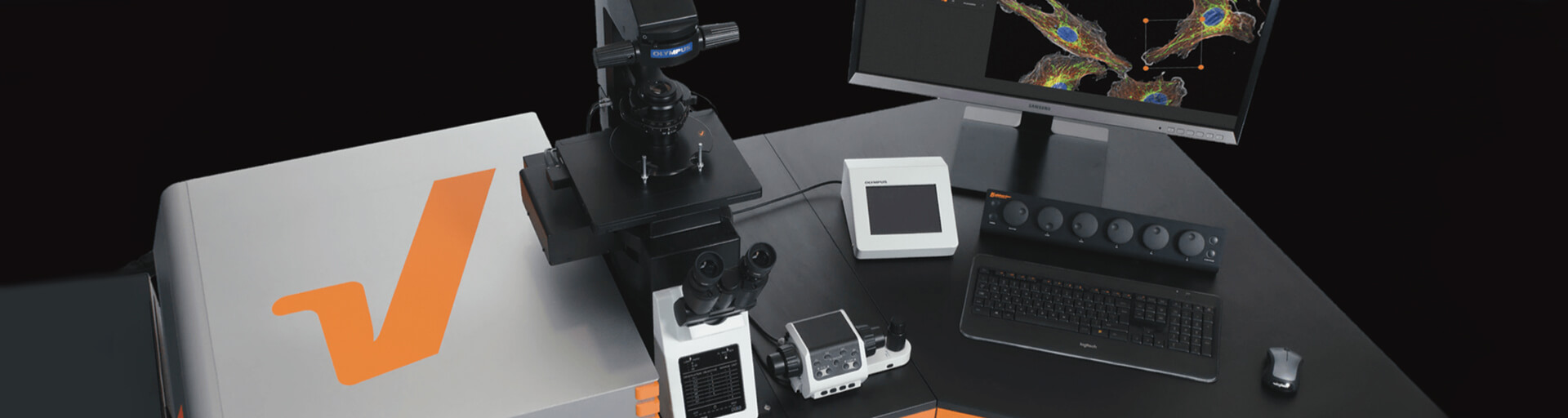
MIRAVA POLYSCOPE – All in one and on for all: the perfect image
Science beyond Barriers

abberior instruments

All-purpose, Cell Biology, Neurobiology

2025
International Journal of Molecular Sciences

The Role of Hydrogen Sulfide in the Localization and Structural–Functional Organization of p53 Following Traumatic Brain Injury: Development of a YOLO Model for Detection and Quantification of Apoptotic Nuclei

Authors:

Evgeniya Kirichenko, Stanislav Bachurin, Anton Lisovin, Rozaliia Nabiullina, Marya Kaplya, Aleksandr Romanov, Chizaram Nwosu, Stanislav Rodkin

Keywords:

hydrogen sulfide; p53; traumatic brain injury; apoptosis; neurons; glial cells; YOLO

Abstract:

Traumatic brain injury (TBI) triggers a cascade of molecular and cellular disturbances, including apoptosis, inflammation, and destabilization of neuronal connections. The transcription factor p53 plays a pivotal role in regulating cell fate following brain injury by initiating pro-apoptotic signaling cascades. Hydrogen sulfide (H2S) may significantly contribute to the regulation of p53. Using scanning laser confocal microscopy, we found that after TBI, p53 accumulates extensively in the damaged cerebral cortex, showing distinct subcellular localization in neurons and astrocytes. In neurons, p53 predominantly localizes to the cytoplasm, suggesting involvement in mitochondria-dependent apoptosis, whereas in astrocytes, p53 is found in both the nucleus and cytoplasm, indicating possible activation of transcription-dependent apoptotic pathways. Quantitative analysis confirmed a correlation between p53 localization and morphological signs of cell death, as revealed by Sytox Green and Hoechst nuclear staining. Modulating H2S levels exerted a marked influence on p53 expression and distribution. Administration of the H2S donor sodium thiosulfate (Na2S2O3) reduced the overall number of p53-positive cells, decreased nuclear localization, and lowered the level of apoptosis. Conversely, inhibition of H2S synthesis using aminooxyacetic acid (AOAA) led to enhanced p53 expression, increased numbers of cells exhibiting nuclear fragmentation, and a more pronounced apoptotic response. These findings highlight a neuroprotective role for H2S, likely mediated through the suppression of p53-dependent cell death pathways. To improve analytical accuracy, we developed a YOLO-based deep-learning model for the automated detection of fragmented nuclei. Additionally, evolutionary and molecular dynamics analysis revealed a high degree of p53 conservation among vertebrates and indicated that, although H2S does not form stable complexes with p53, it may modulate its conformational dynamics.

< Back to publications
Full article >
linkedin facebook bluesky twitter Instagram

World+49 551 9995 4010USA+1 301 661 0078

© 2025 abberior

Superresolution & Confocal Systems

  • Overview
  • MINFLUX
  • MIRAVA POLYSCOPE
  • INFINITY
  • FACILITY
  • STEDYCON
  • Software Overview
  • LiGHTBOX
  • STEDYCON smart control
  • iMSPECTOR

Superresolution & Confocal Modules

  • Overview
  • MINFLUX Module
  • MATRIX Detector
  • TIMEBOW Imaging
  • FLEXPOSURE Illumination
  • RAYSHAPE Mirror
  • TRUESHARP Deconvolution
  • EASY3D
  • RAINBOW Detection
  • STED Lasers
  • Autoalignment
  • Autofocus
  • Excitation Lasers
  • Accessories
  • Custom Solutions

Dyes & Labels

  • Overview
  • abberior STAR
  • abberior LIVE
  • abberior FLUX
  • abberior CAGE
  • abberior Supplies

Shop

  • Dyes by Product Name
  • Dyes by Technique
  • Dyes by Label
  • Mounting Medium
  • Cells and Nanoparticles

Applications

  • Overview
  • Biophysics
  • Cell Biology
  • Live Cell Imaging
  • Material Science
  • Membrane biology
  • Microbiology
  • Neurobiology
  • Physiology
  • Plant Science
  • Virology
  • Zoology

Company

  • People
  • Founders
  • Mission
  • Career
  • Vacancies
  • Locations

News & Events

  • News
  • Events
  • Webinars
  • Past Events

Expertise

  • Knowledge Base
  • FAQ Videos
  • FAQ
  • Publications
  • White Papers
  • Sample Gallery
  • Microscopy Tutorials
  • Webinar Recordings
  • Protocols
abberior instruments GmbH:
  • Imprint
  • Privacy Policy
  • Terms of Sale
abberior GmbH:
  • Imprint
  • Privacy Policy
  • Terms of Sale
Abberior Instruments America LLC:
  • Privacy Policy
  • Terms of use USA
  • contact
  • manuals
  • service
  • shop